


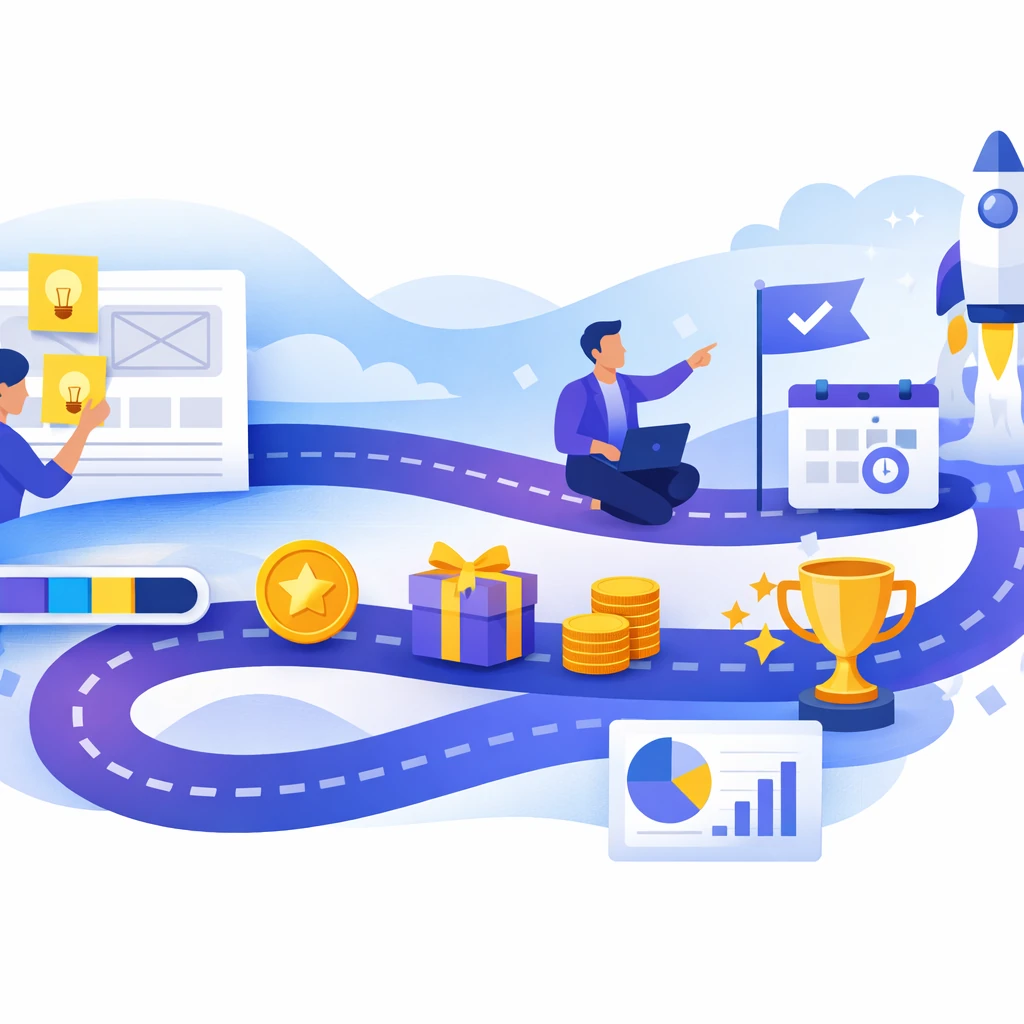
A Practical Guide to Designing High Impact Gamified Campaigns
In a world where users are constantly exposed to ads and promotions, traditional campaigns struggle to stand out. This is where campaign games come in, blending marketing goals with interactive, playful experiences that people actually want to engage with.
But launching a successful campaign game is not about adding points or prizes at the last minute. It’s a structured journey, from concept to launch, that requires strategy, creativity, and execution.
Here’s how successful brands do it.
What Are Campaign Games?
Campaign games are short-term, goal-driven gamified experiences designed to support specific marketing or business objectives, such as:
- Increasing app traffic
- Boosting seasonal sales
- Driving feature adoption
- Collecting user data
- Strengthening brand engagement
Unlike full games, campaign games are lightweight, focused, and tightly aligned with campaign KPIs.
Step 1: Start with the Business Goal (Not the Game)
Every effective campaign game starts with clarity. Before thinking about mechanics or visuals, ask:
- What behavior do we want to drive?
- Who is the target audience?
- How will success be measured?
Common campaign goals include:
- Daily active users (DAU) growth
- Repeat visits during a campaign period
- Conversion from engagement to purchase
When the goal is clear, game design becomes intentional, not decorative.
Step 2: Understand Player Motivation
Campaign games work best when they align with real user motivations, not just brand incentives.
Key questions to explore:
- Are users driven by rewards, status, or progress?
- Do they prefer quick wins or longer challenges?
- Is competition or collaboration more appealing?
Mapping motivations helps determine whether the campaign should focus on:
- Challenges and missions
- Progression and levels
- Collectibles and rewards
- Time-based or seasonal urgency
Step 3: Design the Core Game Loop
The heart of any campaign game is its core loop, the repeating cycle that keeps users engaged. A simple and effective loop looks like:
- User takes an action
- User receives feedback or reward
- Progress is shown
- A new goal is unlocked
This loop should be:
- Easy to understand
- Fast to complete
- Satisfying to repeat
Complexity can kill momentum in short-term campaigns.
Step 4: Align Rewards with Real Value
Rewards are not just incentives; they are signals of value.
Effective campaign rewards:
- Feel relevant to the user
- Are clearly connected to effort
- Support business goals
Examples include:
- Discount codes or cashback
- Exclusive access or content
- Loyalty points or in-app benefits
Avoid rewards that feel random or disconnected from the brand experience.
Step 5: Design for Speed and Simplicity
Campaign games live in real-world constraints:
- Limited time
- Short attention spans
- Diverse user segments
That’s why successful campaign games are:
- Easy to enter (low-friction onboarding)
- Playable in seconds, not minutes
- Accessible across devices
If users need long explanations, the campaign will lose traction.
Step 6: Test, Iterate, and Optimize
Before full launch, testing is critical. Key things to test:
- Entry flow and first interaction
- Clarity of goals and progress
- Reward perception
- Drop-off points
Even small tweaks, like progress visibility or feedback timing, can significantly improve performance. Campaign games thrive on iteration, not perfection.
Step 7: Launch, Monitor, and Amplify
Launch is not the finish line; it’s the beginning.
During the live campaign:
- Monitor engagement metrics in real time
- Adjust difficulty or rewards if needed
- Amplify through push notifications, social media, and in-app messaging
Momentum matters. The more alive the campaign feels, the more users participate.
Common Mistakes to Avoid
Many campaign games fail due to avoidable issues:
- Designing mechanics before defining goals
- Overcomplicating the experience
- Ignoring user motivation
- Treating gamification as a visual layer only
Campaign games are systems, not just screens.
