


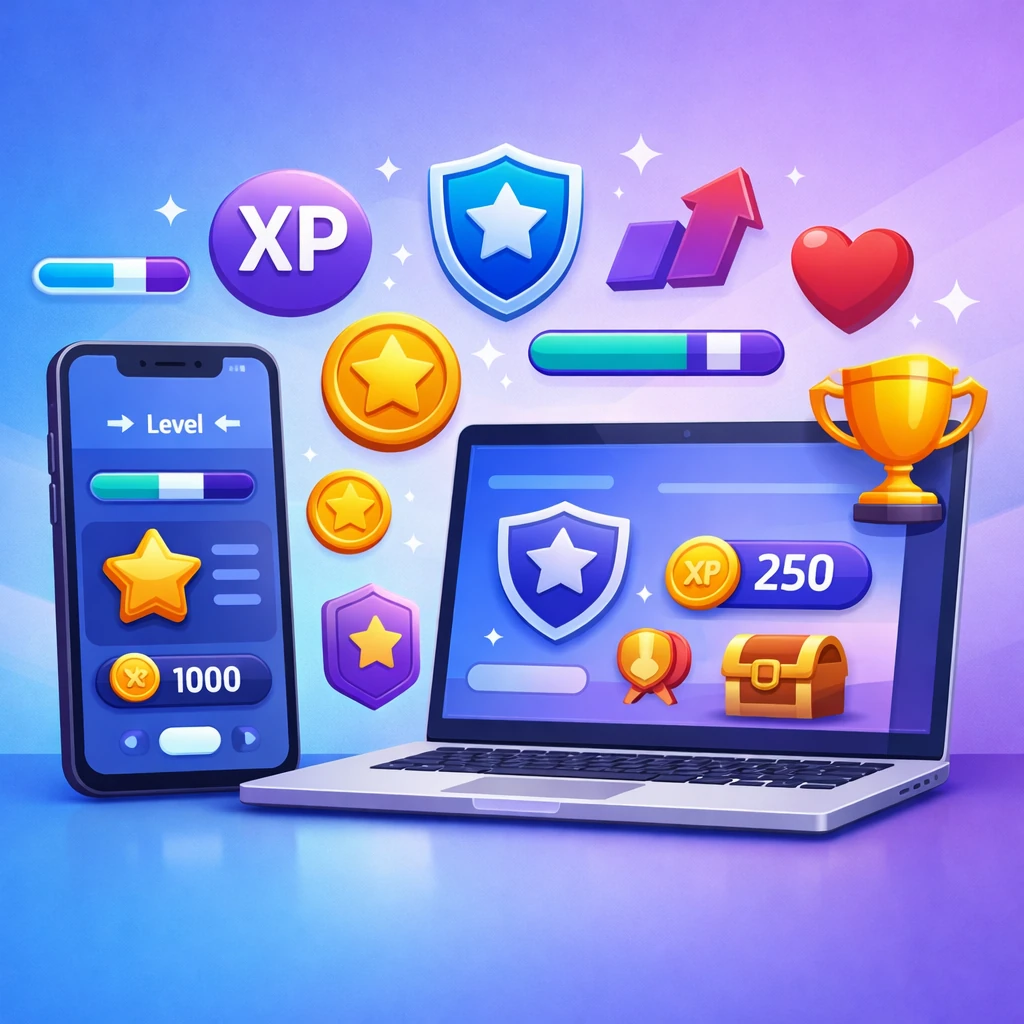
How Smart Brands Turn Engagement into Loyalty and Growth
In today’s crowded digital landscape, capturing attention is hard — keeping it is even harder. Users are bombarded with ads, notifications, and content every second. This is exactly why gamification has become such a powerful strategy for brands.
Gamification isn’t about turning your product into a game. It’s about applying game mechanics to create meaningful, motivating experiences that users actually want to engage with.
So why does gamification work so well for brands? Let’s break it down.
1. Gamification Taps into Basic Human Psychology
At its core, gamification works because it aligns with how humans are wired.
People are naturally motivated by:
- Progress and achievement
- Rewards and recognition
- Curiosity and challenge
- A sense of control and mastery
When brands use elements like points, levels, badges, challenges, or progress bars, they activate these intrinsic motivations. The experience feels rewarding, not forced.
Instead of asking users to do something for the brand, gamification makes users feel like they’re doing something for themselves.
2. It Turns Passive Users into Active Participants
Most brand experiences are passive: scroll, click, leave.
Gamification changes that dynamic.
By introducing interactive mechanics — such as missions, streaks, leaderboards, or unlockable content — brands invite users to participate, not just consume.
This shift from passive to active engagement leads to:
- Longer session times
- Higher return visits
- Stronger emotional connection
And engagement is the foundation of loyalty.
3. Gamification Makes Progress Visible (and Addictive)
One of the biggest reasons users abandon apps or platforms is that progress feels invisible.
Gamification solves this by making progress clear and motivating:
- “You’re 80% there”
- “One more step to unlock the reward”
- “Level up after this action”
Visible progress creates momentum. Users are far more likely to continue when they can see how close they are to a goal.
This is why gamification is so effective in loyalty programs, fintech and wallets, learning platforms, fitness apps, and habit-building products.
4. It Strengthens Brand Recall and Emotional Connection
People don’t remember features — they remember experiences.
A well-designed gamified journey:
- Feels personal
- Creates small moments of delight
- Builds positive emotional associations with the brand
Over time, these small moments of delight shape how users feel about your brand—and emotions influence decisions far more than logic.
5. Gamification Drives Desired Behaviors (Without Forcing Them)
Smart brands don’t use gamification randomly. They use it strategically to guide behavior.
Examples include:
- Encouraging repeat purchases
- Increasing wallet top ups
- Educating users about features
- Motivating profile completion
- Promoting exploration of new services
Instead of pushing users with pop ups or reminders, gamification pulls them forward with incentives, curiosity, and a sense of achievement.
6. Data-Driven, Measurable, and Optimizable
One of gamification’s biggest advantages for brands is measurability.
Every interaction can be tracked:
- Completion rates
- Drop off points
- Reward effectiveness
- Engagement by segment
This allows brands to continuously test, learn, and improve the experience — turning gamification into a growth engine, not just a design layer.
Why Gamification Fails (and How Brands Can Get It Right)
Gamification doesn’t work when:
- It’s just points with no meaning
- Rewards feel irrelevant
- Mechanics aren’t aligned with user goals
- It’s added as an afterthought
Successful gamification starts with strategy, not features:
- Understand user motivations
- Define clear business goals
- Design meaningful progress and rewards
- Keep the experience simple and human
